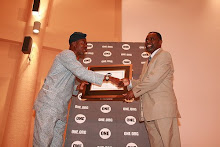
The quarterly meeting of the Nigeria Inter-Religious Council (NIREC) ended last week with the council urging the governments, groups and all Nigerians, particularly the Faith-based Organizations to build a systematic platform for peace and religious harmony in Nigeria through the promotion of socio-economic justice, transparency and good governance.
This, according to the council, this would help to accelerate the attainment of the Millennium Development Goals MDGs for reducing maternal mortality and promoting child survival.
This was part of the resolution from the meeting at the Maiduguri International Hotel, which held from May 4th to 7th 2008, under the Co-Chairmanship of the Sultan of Sokoto, who is also the President-General of the Nigerian Supreme Council for Islamic Affairs (NSCIA) His Eminence, Alhaji Muhammadu Sa’ad Abubakar CFR; and the President of Christian Association of Nigeria (CAN), His Grace Archbishop John Onaiyekan, (CON).
The council asserted that in spite of its human and material resources, Nigeria’s maternal and child morbidity and mortality rate are some of the highest in the world. It appealed to all citizens to support the government’s campaign for eradication of polio and other childhood diseases by accepting immunization. This is one of the cost-effective interventions under the integrated maternal, newborn and child health strategy of the federal ministry of health aimed at reducing the maternal and child mortality.
The council stated that pervasive poverty, denial of basic amenities, insecurity and collapse of infrastructure are some of the sources maternal and child mortality. It urged the government to increase the tempo of sustainable measures for the eradication of poverty through job and wealth creation which will channel the energies of our youths towards productive ventures.
The council acknowledged that HIV/AIDS has added to the country’s disease burden and that Nigerian youths who are the country’s hope constitute the most vulnerable group of those infected. It called on Faith-based Organizations to educate their members on the tenets and injunctions of their religion to limit the spread of HIV/AIDS and reduce the high number.
By Nnenna Ike
Thursday, 15 May 2008


Monday, 5 May 2008
CHIEF commends Media advocacy for MNCH
The Health Journalist Immersion Project for the media advocacy for Maternal, Newborn and Child Health (MNCH) has been described as one of the most effective means for ensuring the improvement and implementation of all health policies especially those that relate to women and children. This assessment was made by Mrs. Remi Akinmade, Executive Director of Community Health Information Education Forum (CHIEF), a non-governmental Organization during a courtesy visit made by Devcoms to their office in Lekki, Lagos.
According to her, health mortality and morbidity rates have remained high in Nigeria largely due to ignorance. There is an urgent need to bring health information education communication to the doorsteps of individuals, families and communities. This is the point where concerted efforts by grassroot organizations such as CHIEF, in active partnership with journalists would reveal the health realities so as to educate the public. This would also ensure that policy makers know exactly where there are gaps in policy implementation and practices that would ameliorate them.
She stated that correct information is vital as it has saved the lives of many community women, especially when it was difficult for them to access health care services. Through proper information, they know how to take better care of themselves and their children, understand the need to attend ante-natal clinics, and know when it becomes imperative that they access healthcare.
She urged other organizations to partner with Devcoms to bring about the needed change in the implementation of maternal, newborn and child health policies in Nigeria. Akinmade urged the media not to relent in the effort at drawing attention to the inadequacies in our health care system especially as it concerns women and children who are, most times, the vulnerable and unvoiced segments of the society.
CHIEF is grass-root organization based in Lekki, Lagos whose vision is to promote grass-root health development, communication and care. Amongst their objective is to reduce maternal/infant morbidity and mortality rate through establishment of primary health clinics/outreach clinics and to promote home-based care in the community.
By Nnenna Ike
Tuesday, 29 April 2008
Talking and listening to youth a crucial step in preventing HIV and AIDS, unwanted pregnancy, and more
Despite the advances in treatment, keeping the world’s nearly one billion young people from becoming infected with HIV in the first place represents the most realistic way to curb the HIV and AIDS pandemic. Many committed professionals have designed policies and programmes to help adolescents protect their sexual and reproductive health. Yet in doing so, they rarely ask themselves whether they listen to young people first.
Guttmacher Institute and nine partner organizations in Sub-Saharan Africa embarked on a research study to find out whether the next generation is well protected. The study reveals that across Ghana, Malawi, Burkina Faso and Uganda young people cited fear, shame and embarrassment as their main reason for not going to health clinics and hospitals for sexual and reproductive health care, despite a stated preference for formal health services.
The years between ages 15-20 are marked by a tremendous shift in sexual behaviour, hence the need for young people to access reliable information and nonjudgmental interaction with adults. The study showed that parental monitoring of teenage activities (including their friends) is not of any use if they do not first talk to them about unsafe sex and its implications. One of the most intractable challenges is for adults to accept the reality that adolescents are or will soon be sexually active and therefore need information about how they can protect themselves from unwanted pregnancy and sexually transmitted diseases.
By Ambia Hirsi
Kenya Broadcasting Corporation
ambiafize@yahoo.com
Monday, 28 April 2008
Protecting the next generation

Photo Credit: David Colwell (c) 2008
Recommendations and policy implementation strategies resulting from the study done in four African countries on the realities of the sexual and reproductive health of young people were presented yesterday at the on-going ‘Youths Deliver the Future’conference.
According to the study titled "Protecting the next generation" carried out by the African Population and health Research Centre, in Uganda, Malawi, Ghana and Bukina Faso, many more young people are sexually aware, while the older ones are becoming sexually active before marriage.
As such, abstinence until marriage is not a message that resonates with many adolescents. When they have to seek sexual and reproductive health services, the study discovered that they prefer going to professional centres rather than family or community gatekeepers. Cost and embarrassment are major barriers to seeking services. Unintended pregnancy was found to be of more importance to adolescent females than HIV infection.
Mandatory sex education is advocated and this education should be started early, at least during the last two classes in primary schools. To ensure the effectiveness of this, there would be a need to insist on mandatory schooling for youths.
Religion plays an important part in the lives of youths and as such, there is a need to work with religious bodies to propagate the
The study recommended among others that:
• Programmes should accept the reality of adolescent sexuality and work to de-stigmatize sexual activity among older un-married adolescents.
• Make services for adolescent quite low, ensure confidentiality and non-judgmental services besides expanding health facilities to meet the needs of the most vulnerable youth
• Target journalists in outreach and new research studies, programme and policy initiatives
• Promote condoms for the prevention of pregnancy, and not only for HIV prevention.
• Promote services to cater for out-of –school youths.
By Nnenna Ike
Investing in Young People at 'Youth Deliver the Future' conference

Photo Credit: David Colwell (c) 2008
African governments should urgently invest in programs that focus and enhance the health and development of young people says experts at the uniquely designed international conference on Young People's Health and Development that opened on Sunday in Abuja, Nigeria.
The three day conference brought together an assembly of researchers, academicians and policy makers in a series of interaction and knowledge sharing to promote and better prepare the youth for the new world.
The conference dubbed "Youth Deliver the Future" Investing in Young People's Health and Development: Research that Improves Policies and Programs, seeks to find solutions to various problems facing youth.
These problems include lack of access to education, health and information services, increased HIV infection and sexually transmitted diseases, early marriages, unintended pregnancies and death from unsafe abortions, drug abuse, mental illnesses, death in road crashes, and acquiring poor nutritional and exercise habits among others.
Speaking during the opening ceremony held at the Nicon Luxury Hotel in Abuja, Nigeria's First Lady Hajia Turai Umar Yar'Adua in a speech read on her behalf by the Minister of Health and Labour Dr Hassan Muhammad Lawal, said to reduce the risks young people are faced with and promote their positive development, nations and societies must invest in young people more than ever before.
The First Lady said young people hold the key to the future and the slogan of this conference, "Youth deliver the future" is therefore an apt one.
Mrs Yar Adua noted that the youth who will effectively deliver on the future is one that has been adequately prepared for the future and one in whom the society has sufficiently invested in to ensure maximal development and provide relevant opportunities to optimize his or her potential.
"Without proper development of young people there will be no future development anywhere" she emphasized.
She reiterated the need to optimize youth development investments through evidence-based policies and programs.
"Today the world has the largest number of young people ever recorded in history -approximately two billion people between the ages of 10 to 24, most of whom are in Africa and Asia, therefore the need to confront the challenges facing young people in various areas of development has never been greater".
She said the substantial increase in the number of young people globally presents more opportunities than challenges and added that equipping this energetic and technologically-minded group with the best of resources offers opportunity to move the world forward like never before. She said investing in youth will help the world achieve the Millenium Development Goals (MDG's).
She hoped the conference will enable the world to commit themselves to the new development of the future generation. She further reiterated her government's renewed commitment to the health and development of young people as evidenced by the recent launch of a new National Policy on Health and Development of Adolescents and other Young People in Nigeria, and increasing investment in related programmes.
Minister for Health and Labour Dr Hassan Muhammad Lawal said there is need to take all necessary measures to invest in young people's health and development so that Africa can enjoy the demographic bonus of this age group.
The conference is funded by the Bill and Melinda Gates Institute for Population and Reproductive Health John Hopkins University in partnership with Centre for Population and Reproductive Health, University of Ibadan and Department of Community Health, Obafemi Awololo University.
By Redemtor Atieno
Kenya freelance journalist
ratieno@gmail.com
‘Youth are the best investment in the future of the nation’
Dr. Lauri Laski, Head of Adolescents and Youth, UNFPA, talks about the positive impact that youth have on society at the 'Youth Deliver the Future' conference.
What did UNFPA bring to the ‘Youth Deliver the Future’ conference?
UNFPA brought young people from around the world to the conference. This is very important for the conference agenda. Young people are after all a dynamic force for social change, and can advocate on behalf of marginalized youths. This can achieve a lot. Internationally UNFPA sponsored five people, and in Nigeria we sponsored 47 people.
What are your impressions of the conference so far?
I think the conference is a great idea. It is the first international conference that focuses on adolescent health research with a focus on reproductive health. If we can learn from this conference and support the development of research on adolescents and convince investors to invest more in young people, it would be a great achievement. Youths are the best investment in the future of the nation, as they are healthy and fresh workers.
What do you feel should be the outcomes of the conference?
We need to look at the research agenda of the conference so that African universities can do operations research and evaluate their own adolescent health programs. This allows the universities to become self sufficient in evaluating their adolescent health programs. This is an opportunity for Africa—the number of youths is very large, and many are living in poverty. Building adolescent health programs is a way to break the string of poverty that has captured families for generations. We need to invest in the most vulnerable populations, particularly young girls. We need to ensure that girls are put into school and given lifelong skills to enter labour markets and boost the national economy. Look at China and South Korea—they are investing a lot in young people and it has made a positive impact there!
What knowledge should youth delegates take away from this conference?
Youth can learn about successful interventions and best practices for adolescent health programs. Our youth are great links between researchers and policy makers. They can communicate results of research and advocate for more funding for adolescent health programs within our government policies. They can pressure their governments to put more funds into poverty prevention plans and to build strategies and policies in support of adolescent development.
By Amanda Hale
Nations should take advantage of demographic dividends

There is an expected increase in the population of young people globally, with many nations having a significantly higher number of people of the working age who would be mainly young people. With this in view, researchers are urging countries to strategize to use the demographic dividends that would accrue to their country.
This information was presented by Professor Amy Tsui of the Johns Hopkins Bloomberg School of Public Health at a Pre-conference training for journalists attending the ‘Youth Deliver the Future Conference’. The Pre-conference training was organized by Population Reference Bureau (PRB).
According to her, African countries should try harder to ensure the judicious use of public resources to cater for the health of the people, especially youths and young people, who would make up the country’s workforce. Though every country has competing needs if adequate resources are put in place now, some of the health, education and poverty problems being encountered now due to the present demography of the nation would be alleviated.
To ensure that upcoming African economies reap the demographic dividend of their youthful generation, these strategies were advocated: increasing female enrollments and labour force participation, introducing changes in technology and institutions to raise agricultural productivity while increasing land conservation, developing and implementing a more effective family planning policy.
By Nnenna Ike
FG pledges to invest to optimize youth potentials
The Youth Deliver the Future Conference 2008 holding at the Nicon Luxury Hotel Abuja opened yesterday with the representative of the Nigerian government reiterating its commitment to increasing and improving programmes for the actualization of the development of the youth in Nigeria.
In the opening speech, Dr Hassan Lawal, representing the First Lady and the Minister of Health and the minister of Labour said, ‘The path to a glorious future for our world and the achievement of our collective development vision as represented in the Millennium Development Goals lies in massively and strategically investing in young people’s development.’ According to him, the government of Nigeria’s commitment had been exemplified with the recent launch of the new ‘National Policy on the health and development of Adolescents and other young people in Nigeria’ and looks forward to the conference outcome.
Professor Oladosu Ojengbede, Chair of the National Steering committee of the conference stated that the conference was designed to assemble policy makers and researchers to present results of studies from around the globe which all aim at improving the environment for optimizing the great potentials of youths and young people. His words, ‘Youths make up about 40% of the nation’s population our youths, the poor reproductive health indicators of youths is unacceptable and a challenge to human intellect.’ The conference aims at deliberating and unveiling solutions and interventions that would promote adolescent health globally and in Nigeria.
While welcoming participants to the conference, Professor Amy Tsui, Chair of the International Steering Committee expressed the hope that the conference would bring about tremendous knowledge to help harness the investment that lie in the youth population of every nation.
Goodwill messages came from the Bill and Melinder Gates Foundation, World Bank, World Health Organization, Packard Foundation, UNFPA, USAID, youth ambassadors and other Development partners.

Photo Credit: David Colwell (c) 2008
By Nnenna Ike
Conference reveals the who, what, when, why and how of adolescent health programs
International representatives from World Health Organization, World Bank, Youth Coalition, and United Nations Population Fund Agency spoke on the urgent need to promote adolescent health and development during the opening ceremony of the ‘Youth Deliver the Future’ in Abuja, Nigeria yesterday.
Jane Ferguson of the World Health Organization (WHO) in Geneva, reflected on the evolution of adolescent health over the last 20 years. Twenty years ago, most research was focused on the why of adolescent health—on why the global policies should reflect adolescent issues such as HIV/AIDS and too-early pregnancy among youth.
‘While regrettably [the why] is still needed, particularly for convincing national level policy makers, people are much more aware of the need to focus on adolescents,” said Ferguson. She cited the MDG indicators on HIV and reproductive health as areas that provide the world with vision and a sense of urgency for adolescent issues.
For the who aspect, the conference will focus on the different groups of adolescents around the world, such as girls and boys, young and older adolescents, married adolescents, and adolescents who are living in particularly vulnerable circumstances. “This is good because programmatically, it is very important to be as specific as possible about what one does differently [for these groups],” said Ferguson.
The conference also provides abundant attention to what needs to be done for adolescents. Some sessions would be on overall education, sex education through school and mass media. Others would be focusing on models of health service delivery tailored to meet adolescents’ needs, as well as programs to support parents of adolescents.
Perhaps the most significant in the conference are the increasing efforts to assess the when and the where of adolescent programs, in order to assess the impact of programs on adolescents’ attitudes and behaviours.
Ferguson’s words: “Unless we can be clear about the results of programming for adolescents, as well as the costs of these programmes, we will not be able to persuade the decision makers to allocate the investments needed for sustained programming.”
She concluded by saying that to get adolescent health on the global agenda we will not only have to be able to make a compelling case, but to be able to demonstrate how adolescent health programs are “do-able.”
“We are confident that the discussions over the next days will clarify the challenges we face in improving policies and programmes for adolescent health and development in countries, and persuading others to do this now,” said Ferguson.
Ferguson promised that the John Hopkins’ ‘Youth Deliver the Future’ conference would move away from the why and focus more on the who, the what, the where, the when, and the how of adolescent health.
By Amanda Hale
Investing into young people’s health; quotes to ponder on
Young people have again attracted the attention of the world with the ongoing international conference on young people’s health and development. The opening ceremony of the conference under the theme ‘youth deliver the future,’ offered yet another volley of wonderful speeches punctuated with quotes for delegates to ponder once they return to their respective countries.
The First Lady of the Federal Republic of Nigeria, Mrs. Hajia Turai Umar Yar’adua, made an opening address that “the substantial increase in the number of young people globally presents us with more opportunities than challenges. Equipping this uniquely energetic and technologically minded population group with the best of the resources offers the best opportunity to move our world like never before. This is an opportunity we dare not miss; for the consequence of failure is too costly to contemplate.”
But the First Lady was not yet done. “To reduce the risks young people are exposed to and promote their development, nations and societies need to massively and strategically invest in young people’s development more than ever before,” she added.
From the First Lady’s speech it was apparent that there is need for more investment of resources – including financial ones - in young people’s programmes. Financial resources always present a big challenge to youth programmes as often times once the funding taps are closed, everything comes to a halt. But representatives of several development agencies that have been funding youth programmes offered a ray of hope, which policy makers and government officials from developing countries can take advantage of.
“The United States Agency for International Development, in collaboration with the Nigerian Government is committed to investing in the lives of the Nigerian people and worldwide through our youth programmes and interventions,” said USAID’s Dr Alh. Abdullahi Mawaida.
Representing the World Bank, Ms Elizabeth Lule said, “We stand ready to finance programmes that work for the benefit of young people and their families, communities and nations. Investing in young people’s health and development and looking at the evidence to improve policies and programmes is central to reducing global poverty and promoting economic growth…”
However, she stressed that there is need to focus more on programmes that have worked for scale-up. This indeed saves resources from being wasted on programmes that do not work.
By Kakaire Kirunda
Daily Monitor,Uganda
akakaire@monitor.co.ug
Hope for the future
Youths in developing countries have been given hope for a brighter future. Several speakers at the opening ceremony of the international conference on investing in young people’s health and development yesterday outlined the need to focus on the health and development of young people.
“To reduce the risks young people are exposed to and promote their positive development, nations and societies need to massively and strategically invest in young people’s development more than ever before,” said Hajia Turai Umar Yar ‘Adua, Nigeria’s First Lady.
According to the December 2007 African journal of Reproductive Health, Africa has a high burden of ill-health associated with adolescent reproductive health. However, there is little understanding of what needs to be done to reduce the magnitude of this problem.
Susan Rich of the Bill and Melinda Gates’ Foundation outlined the Foundation’s commitment to making strategic investments in the health and development of young people, which will yield returns in future. Since 1995, the Foundation has invested $129 million to improve information and services to protect young people from HIV/AIDS and unwanted pregnancy.
It is good that society is starting to recognize the vulnerability of females. A study on protecting the next generation in sub Saharan Africa, which will be presented today reveals that adolescent females in sub-Saharan Africa tend to have sex at an earlier age than males. This puts them at a risk of unwanted pregnancies, HIV and other adverse outcomes. The study was carried out in Uganda, Burkina Faso, Ghana and Malawi. Nearly 60% of females have had sex by 18 years compared to 40-45% of the youth according to the study.
These findings, although alarming, will go a long way in tickling governments and policy makers particularly in the developing countries, where the biggest number of youth is based, to come up with realistic policies to ensure a bright future for the biggest composition of the global population.
Like different speakers noted yesterday, we cannot have a bright future without addressing the reproductive health concerns of the youth.
By Anthony Bugembe
The New Vision, Uganda
abugembe@newvision.co.ug
Sunday, 27 April 2008
Journalists train on issues affecting adolescent health
With 20 per cent of the global population between the ages of 10-19, today's youth are making a critical impact on the society around them. By the time a young person turns 16, he or she may have moved out of their parents' house, had their first job, had their first sexual experience, had their first child, or even entered their first marriage. The transition from childhood to adulthood is becoming increasingly more demanding as adult expectations and responsibilities are put straight into the hands of adolescents.
“Adolescence is a turbulent time,” said Amy Tsui of John Hopkins University, USA, during her presentation on the demographics of young people around the world at yesterday's Journalist Seminar on Health and Development of Young People, in conjunction with the John Hopkins' 'Youth Deliver the Future' conference in Abuja, Nigeria.
But the training revealed that journalists can help adolescents to make a smooth transition from childhood to adulthood by raising positive awareness for counseling and mentorship for youth, sexuality education, guidance and resources for youth, and a lance of peer counseling and parent-to-child communication among other stories.
During a story-generating exercise led by Akin Jimoh of Development Communications Network and Josephine Kamara of Internews Nigeria, Josephine Kamara urged journalists to narrow in on issues of adolescent health and development at the conference by finding people to share personal stories that reflect important issues, such as peer
pressure or sexual violence.
“It will be tempting to cover every presentation and speaker at the conference, but that is impossible,” she said. “Just get the specifics for your topics and tell the issues like they are.”
Journalists then brainstormed a number of topics including abstinence/sex policies, poverty, teen pregnancy, unemployment, media pressure/influence, communicating with adults, discussing taboo issues with parents and teachers, demographic stories, and the effectiveness of current youth programs.
Apart from the brainstorm session, the training also had various presentations on 'Key issues facing young people' from Family Health International, 'HIV Stigma and Discrimination and the Media' by International Center for Research on Women, and 'Finding and Using Data on Youth' by Population Reference Bureau (PRB).
Amy Tsui concluded the training by saying, 'I'm not a journalist, I'm not a writer, but I have a strong belief in the importance of what you do.'
By Amanda Hale
Youths are the solutions to the problems of this generation----Prof Amy Tsui
In a brief interview at the pre-conference training for journalists at the ongoing 'Youth deliver the future Conference' in Abuja, Nigeria Professor Amy Tsui, of the John Hopkins Bloomberg School of Public Health, USA reiterates the importance of assuring the health of youths in this dispensation
Question: The Youth deliver the future conference starts today, with the theme ‘Investing in young people’s health and development’. Why is the focus on youths?
Today there are more adolescents than at any time in history. It is estimated that in sub-Saharan Africa, half of the population is under the age of 15, and less than 5% is over 60. There are 1.2 billion people between the ages of 10 to 19. This group makes up about 20% of the global population (WHO, 2002) so youths are the solution to the problems of this generation. Important lifetime consequences come about from the things that this group of people do and there are demographic dividends to be accrued from the percentage of the burden placed on this group. It is for this reason that issues concerning their health is of paramount importance. This conference seeks to share research results on studies on youths from across the globe and present these results such that policy makers would be presented with ideas and best practices, so that at the end of the conference, it would hopefully bring a paradigm shift in policy making and implementation, and monitoring for best practices.
Question: Why was the conference venue chosen to be in Africa?
The youth conference is one in the series of biannual conferences organized by the John Hopkins School. We have had a conference on Visco Vaginal Fistulae (VVF) and one on integrating HIV into reproductive health policies. This is the third one and is being hosted in Africa because of the percentage of young people in the continent, and because in some areas of health such as mental and sexual health, adolescents suffer disproportionately. The consequences of poor health at this age also stretch into the future, affecting their prospects and those of their children. In addition, health-related behaviors, such as smoking, eating habits, sexual behaviors, and help-seeking behaviors developed during adolescence often endure into later life.
Question: How can African countries take advantage of the opportunities given by the expected Demographic dividend?
African countries should try harder to ensure the judicious use of public resources to cater for the health of the people, especially youths and young people. Every country has competing needs but if adequate resources are put in place some of the problems encountered now due to the demography of the nation would be alleviated. Besides, increasing female enrollments and labour force participation, introducing changes in technology and institutions to raise agricultural productivity and increasing land conservation, coupled with developing and implementing a comprehensive population policy that includes more effective family planning would ensure that upcoming African economies reap the demographic dividend of this generation.
By Nnenna Ike
Friday, 18 April 2008
Now that my baby is gone...
‘When Tolu was fifteen days old, I noticed that she was breathing in a strange way – making little grunting noises. I called my husband and we both went to the hospital, only to be told by the doctors that my baby had a defective heart. The surgery took place two days later. But instead of getting better, Tolu started looking frail and this alarmed me. She went in for the second surgery, and by now she had become too weak to undergo the third one.
The doctor could not close the hole in Tolu’s heart and after two frightening weeks, Tolu died. All our hopes and dreams were dashed. I would wake every day with my mind full of my baby – so my Tolu is dead! No day went by without my asking “Why?”
Why me? Why my Tolu? It took a while before I could understand and accept that it was not my fault. With lots of support from my husband, relatives and friends, I’ve come to live one day at a time.’ --Words from a grieving mother.
Losing a pregnancy can be very devastating, no matter when it happens or what the circumstance. Experiencing pregnancy loss can bring about a profound change in the mother. It is normal to feel shock, grief, guilt, anger, depression, and a sense of failure. Or, the mother may feel withdrawn and moody, especially if she had told people that she was pregnant before.
But with time comes healing. It is important to give yourself time to heal. There is no need for the mother to pressure herself into getting past the sadness quickly. Although it may seem painful to talk about, sharing the story about the loss will allow the woman to feel less alone and will help her heal. Understanding and support may come from unexpected people.
Also, it is good to remember that men and women grieve in different ways. If your partner doesn't seem to be affected by the loss as deeply as you are, understand that men and women grieve differently. While women tend to express their feelings and look for support from others, men tend to hold their feelings inside and deal with loss on their own. Likewise, men often feel they need to take care of their partners by remaining strong. Sharing one’s feelings and needs gives both parties the freedom to experience the loss in their own way.
Many women who experience pregnancy loss go on to have successful pregnancies. Once the pain of their grief subsides, the women and her partner can talk about whether to attempt another pregnancy and, if so, when she’d like to try again. Another pregnancy may yield feelings of sadness for her earlier loss — but it may also inspire hope for the future.
By Adanma Ike
Thursday, 17 April 2008
Global report on MNCH released today
The Countdown to 2015: Tracking Progress in Maternal, Newborn and Child Health report was released today in Cape Town, South Africa, during the opening ceremony of the international ‘Countdown to 2015’ conference, in which delegates from around the world discussed the major headways and obstacles to achieving global maternal and child health by 2015, in line with the Millennium Development Goals (MDGs) 4 and 5.
The report investigated the maternal, newborn and child health status in 68 key countries around the world, and found that few are making progress in reaching women and children with clinical care services, such as having skilled attendants at delivery or treating children for malaria. Postnatal care is also an important gap in the first week after childbirth when mothers and newborns are at highest risk to illness and complication. Under-nutrition is an area of little or no progress, contributing to more than one-third of deaths in children under five annually. Weak health systems and a lack of data collection and dissemination processes to make timely data more readily available for planning and implementation of MNCH programs are also some of the key obstacles to achieving MDG goals 4 and 5 by 2015.
As such, the report calls for action from policymakers, media practitioners, health workers, activists, and government figureheads to take these crucial steps towards achieving maternal and child health by 2015:
• Sustain and expand successful efforts to achieve high and equitable coverage for priority interventions, including immunizations, vitamin A supplementation, family planning services, and antenatal, childbirth and postnatal care.
• Focus on the priority period within the continuum of care, from pre-pregnancy through 24 months—especially around time of birth.
• Strengthen health systems, focusing on measurable results.
• Set geographic and population priorities—especially targeting sub-Saharan Africa and South Asia—and stick to them during MNCH program planning.
• Prioritize programs for equity—programmatic efforts to address inequities must be supported by strong monitoring and evaluation.
• Monitor and evaluate locally-driven implementation research, and act on the results to deliver best practices for each country in regards to MNCH.
For the complete report on ‘Countdown to 2015’ you can visit www.countdown2015mnch.org/reports. Also stay tuned to Development Communication Network’s Media Deliver Now! blog site for further conference updates.
By Amanda Hale
Tuesday, 15 April 2008
Global ‘Countdown’ to achieving MNCH begins this week in South Africa
A new report on Tracking progress in maternal, newborn and child survival: Countdown to 2015 will be launched this Thursday, April 17, at the International ‘Countdown to 2015’ Conference in Cape Town, South Africa.
The conference, which takes place on April 17-19, offers a range of opportunities for the global community to bring issues of maternal, newborn and child health (MNCH) to the foreground of international debate and policy-making, and to release groundbreaking information on the current state of the world’s progress towards reaching Millennium Development Goals (MDGs) 4 and 5. The event is predicted to be an important milestone following a wave of recent international advocacy efforts to mobilize global commitment and actions in MNCH.
Organized around a series of plenary sessions that focus on intervention coverage, equity, health systems, human resources and aid harmonization, the conference will place special emphasis on parallel sessions to present country case studies and success stories. The main objectives will include disseminating the most recent information on country-level progress in achieving health coverage with interventions for reducing mortality among mothers and children, promoting media visibility for the Countdown to 2015 Report, raising awareness of key decision-markers on MNCH issues, and providing a forum for the development of partnerships dedicated to maternal, newborn and child survival efforts.
With these objectives in mind, this year’s conference intends on making headway toward increasing coverage of key MNCH interventions in countries comprising 97 per cent of the global burden of maternal and childhood deaths. In Nigeria alone about 6 women die every hour from pregnancy-related complications, while infants and children are dying by the thousands every day. The conference is a way to address these tragic figures across the nation and to come up with evidence-based approaches to eliminating such needless deaths among women and children around the world.
‘Countdown to 2015’ takes place in conjunction with the 118th Assembly of the Inter-Parliamentary Union (IPU) in Cape Town, giving conference organizers and delegates a chance to sensitize over 1,000 Parliamentarians to MNCH issues.
Please visit Development Communication Network’s Media Deliver Now! blog to view the upcoming ‘Tracking progress in maternal, newborn and child survival’ report and to read further updates from South Africa.
By Amanda Hale
Tuesday, 25 March 2008
Promoting Long Lasting Insecticidal Nets (LLINs) for malaria control in Nigeria
Nigeria's effort to combat the burden of malaria on its populace received a boost with a new initiative to produce Insecticide treated Nets locally. The country's Ministry of Health with active support from partners and other stakeholders had pooled together over 15 million Insecticide Treated Nets (ITNs) and distributed them to beneficiaries in all the 36 states of the federation, but there is shortfall of about 55 million, "which we are trying to address," says health Minister Professor Adenike Grange.
Intection Bestnet Europe Ltd. in collaboration with Rosies Textile Mills Ltd. are collaborating with the Federal Ministry of Health in the fight against malaria in Nigeria and to produce the nets locally with the establishment of a factory that will produce LLINs at the rate of 100,000 per month in the first year. This capacity will be increased to 200,000 monthly in the second year with provision for annual increases. Similar ventures have been successfully implemented in India, and the Federal Ministry of Health supports the novel approach by Intection in its efforts to contribute to the Roll Back Malaria process in Nigeria.
Past efforts and commitments by the government and her partners in the scaling up of the distribution and use of ITNs in Nigeria had not yielded much as majority of the beneficiaries still have no access to the ITNs. This has posed a great challenge to the attainment of Roll Back Malaria (RBM) and the Millennium Development Goals (MDGs) targets by 2010 and 2015 respectively.
All around the world, appropriate use of Insecticide Treated Nets (ITNs) has led to a sharp decrease in severe malaria attacks by up to 45% and a reduction in child mortality by over 17%. It has been estimated that a total of 74 million long-lasting insecticidal nets (LLINs) are required to achieve universal coverage and that 80% of people at risk should have access to ITNs by 2010.
A greater commitment from governments at all levels and partners is needed for the provision of additional ITNs to sustain the current momentum towards malaria elimination. This will help Nigeria to reach the goal of a Malaria-free Nigeria in line with the Global Malaria Programme strategy and the current strategy for scaling up ITNs distribution, which deems that all persons at risk of malaria should have access to ITNs.
The greatest challenge however is the inadequate capacity to locally provide the LLINs. Furthermore, there is no local technology for the production of LLINs in Nigeria. This calls for novel approaches to ensure an interrupted provision of the LLINs in Nigeria.
 Dr. Yemi Sofola, National Coordinator of the Roll Back Malaria strategy (center right) and Prof. Adenike Grange, Nigerian Minister of Health, meet with officers of Intection Bestnet Europe Ltd. to discuss malaria prevention strategies in Nigeria.
By Amanda Hale
Tuesday, 18 March 2008
Devcoms' Immersion fellows
With the support of Ford Foundation, Development Communications Network conducted the orientation of the first batch of Immersion fellows for Devcoms’ Health Journalists’ Immersion Programme to Strengthen Integrated Maternal, Newborn and Child Health (IMNCH) in Nigeria, from Friday 22nd to Saturday 23rd, February 2008. Fifteen journalists from the print, broadcast, and radio media attended the orientation. The training aimed at better equipping the fellows to work as a critical mass for reporting Maternal Newborn and Child Health (MNCH) issues.
Please read the following profiles and get to know our talented Immersion fellows better!
***
Ijeoma Popoola:
A senior correspondent for the News Agency of Nigeria (NAN), Mrs. Ijeoma Popoola has dedicated much of her career to health and environment coverage in the media. Since her graduation from the University of Nigeria, Nsukka, with a degree in Mass Communication in 1994, Popoola has worked with NAN in covering the health of Nigerian women and children. She believes that a participation in the fellowship for the Immersion Programme will enable her to inform Nigerians to take advantage of existing government facilities for maternal and child health to improve their healthcare and wellbeing.
Ijeoma Iheme:
Ijeoma Iheme’s diverse communications background has landed her positions as a reporter, communications officer, marketing manager, and press officer at various media organizations and companies around Nigeria. As a professional who is interested in issues pertaining to access to good water, sanitation issues, etc. and their relationship to maternal, newborn and child health, Iheme is dedicated to the Immersion Programme and the practical skills she will gain from her journalist training.
Sekinah T. Lawal:
Sekinah T. Lawal is a practising Senior Health Correspondent with the National Mirror Newspapers. In her daily reporting, she advocates for exclusive breastfeeding for newborns and raises awareness of the alarming statistics of the maternal and infant mortality rate in Nigeria. Since graduating from the Universiy of Lagos with a degree in Mass Communications in 1996, Lawal has been very passionate in her reportorial duties especially in the area of Health, hence the prompting to pursue her Masters in Public Health. Lawal believes that partaking in the Immersion Programme will be another opportunity to receive needed information about MNCH, and to have the tools to push for a better policy in terms of women and children issues through the pages of Nigeria’s newspapers.
Godwin Haruna:
Godwin Haruna is a deputy features editor and health editor with THISDAY Newspapers, where he has dedicated most of his time to covering stories on HIV/AIDS, maternal and child health, unsafe abortion and other disease conditions. His journey to join journalism was a conscious one over time, and he derives pleasure in his ability to enlighten the public through his writing. This passion, he believes, is required for journalists to stem the spread of HIV and to force the hands of policy makers to take positive decisions on other disease conditions, especially maternal and child mortality in Nigeria.
Ukpai Oka Ezera:
Ukpai Ezera is a news correspondent at RHYTHM 93.7FM Lagos and reports on health, education and religion beats. He hopes to hone his investigative journalism skills during the Immersion Programme to articulate the views of the generality of the public on their healthcare expectations with a view to enrich government’s policy formulation process through his reportage. In addition, he plans to regularly reconcile the huge budgetary figures for the health sector and its impact on Nigeria’s citizen.
Fatimah Abdulkareem:
As Chief Editor and health reporter for the Broadcasting Corporation of Oyo State (BCOS), Fatimah Abdulkareem has dedicated 17 years to reporting health issues on broadcast and radio media, including her weekly radio and TV programme “You and Your Health” which covers issues relating to maternal, newborn and child health in Nigeria. Her favourite food is pounded yam and vegetable soup, while her hobbies include driving, meeting people and most importantly making a difference in people’s lives. As a journalist focusing on health issues, Abdulkareem believes that prevent HIV positive mothers from infecting the unborn is an area that needs to be focused on and reported on in the media, and she hopes to achieve this through the Immersion Programme.
Jennifer Igwe:
Jennifer Igew is a senior presenter, reporter and producer with the Nigerian Television Authority (NTA 2 Channel 5) in Lagos. She reports on health, environmental and social issues. As a finalist under the Kaiser Family Foundation for the CNN/African Journalist of the Year awards for 2007 HIV/AIDS reporting, Igwe continues to deliver quality health reports on diverse health areas in Nigeria.
Iliya M. Kure:
Iliya Kure is a reporter with the federal Radio Corporation of Nigeria in Kaduna. A graduate from the University of Maiduguri with a BA (Hons) in Mass Communications, Kure reports on issues relating to the Millennium Development Goals (MDGs) and polio vaccinations, among many others, during his time in Kaduna.
Olaiya Temitope Templer:
Olaiya Templer is an interned Reporter with the Guardian Newspaper and covers various beats including news, city file reports, special reports, human-angle stories and cover stories. He feels highly honoured to participate in the Immersion Programme as the programme offers the opportunity to break new ground in the field of investigative reporting and to sway public attention away from issues in politics or sports to the more timely developments in health issues to bring about policy development and implementation.
Abiose Adelaja:
Abiose Adelaja is a correspondent for National Daily Newspaper and anchors four pages of health and science section. A recent nominee for the Nieman Foundation Fellowship in Global Health Reporting at Harvard University, the Immersion programme offers Abiose the opportunity to network with researchers and journalists of like passion and to join in the alliance of pushing maternal, newborn and child health issues on top policy agenda.
Nonye Aghaji:
Nonye Aghaji is a health reporter with Vision FM (92.1FM) in Abuja, Nigeria. She has covered special reports on maternal and child health issues, including safe abortion and paediatric ART, and expects that the investigative skills she will acquire from the Immersion Programme will be very useful to her in doing research and fact finding for further informative stories on MNCH.
Chiamaka Bobby-Umeano:
Chiamaka Bobby-Umeano is a freelance journalist with a great interest in health and development issues. Over the years she has worked with several broadcast companies, including Minaj Broadcast International and Taraba Television, Jalingo, and attended professional trainings in investigative journalism, peace building, and gender mainstreaming to further build her capacity as a health journalist. It is her belief that the Immersion Programme will thus give her the experience to continue addressing issues affecting mothers and children in Nigeria.
C.A. Ugwuegbu:
Chinyereugo Ugwuegbu is an English graduate from the University of Nigeria, Nsukka. Over the past two years Ugwuegbu has worked as a broadcast journalist for Radio Nigeria Abuja National Station as a health reporter and a presenter. Her interest in the availability of information on MNCH and access to health care facilities in rural areas makes her an ideal candidate for the Immersion Programme
Vincent B. Danture:
Vincent Danture is a journalist with the News and Current Affairs Department of Gombe Media Corporation (GMC). He believes that as a journalist with training, responsibility, and the desire to live up to his social responsibility, his experience in covering programmes and events for the Immersion Programme will build his ability to write analysis and commentaries of MNCH that will ensure a multi-sectoral involvement.
Augustine Abutu Alex:
Augustine Alex is a science journalist with the News Agency of Nigeria (NAN) covering health, engineering, agriculture and other related issues. Alex has received multiple trainings from UNFPA News, World Bank, and the World Federation of Science Journalists, and he believes that the participation in the Immersion Programme will position him in good stead to critically analyze trends in the health sector and conduct objective research that would expose the shortfalls of MNCH policies and commit government to action.
Ibrahim A. Yusuf:
Ibrahim Yusuf currently works at The Nation newspaper as a correspondent attached to the Sunday title. Though he is a correspondent on the general beat, Yusuf has reported multiple health-related stories, including reproductive and public health issues over the past six years of his journalist career. His primary concern as a journalist in the Immersion Programme is to raise critical issues that concern public health above the din so as to create complete awareness and ultimately seek for means and ways of addressing such issues for the common good.
Appolonia O. Adeyemi:
Appolonia Adeyemi is a Senior Correspondent and Head for the health desk at NewAge, a publication of Century Media Limited. Her position places her in an editorial position to influence the publication of MNCH issues in health pages, feature pages and anywhere where it is relevant within NewAge. Having taken the decision to be part of the Immersion Programme, Adeyemi feels that the training she will receive will expose her to all aspects of MNCH, especially child growth and survival, of which she will put to good use to influence policies and bring about positive behaviour change geared towards achieving the Millennium Development Goals (MDGs).
Isaiah Abraham:
Isaiah Abraham is a journalist for New Nigerian Newspapers in Abuja. He schooled at the Ghana Institute of Journalism with a focus on Population Communication and Research in 1992, and has since worked at a variety of publications, including Daily Times of Nigeria, and has received such awards as the Nigerian Media Merit Award in 2000. He believes that participation in the Immersion Programme will add value to his professional practice, deepen his knowledge and experience through re-orientation of the mind to recognise issues relating to Maternal and Child Mortality and help to appreciate the danger they constitute.
Sani Shuaibu Malumfashi:
Sani Malumfashi is the center coordinator of the Voice of America VOA Hausa Health Initiative, Reproductive Health and Child Survival. Originally from Katsina, he has 29 years experience working as a journalist in Radio Nigeria and NTA Kaduna. His focus on child spacing and maternal health during his programs is a key reason that Malumfashi is an ideal candidate for the Immersion Programme.
Ebun Babalola:
Ebun Babaolola is a health correspondent with Vanguard Newspapers, where she has reported on health issues for the last three years. She believes that the Immersion Programme will have a positive effect on the face of the country and the people, especially in the area of maternal, newborn and child health, and is grateful to take part in the program.
Bakare Morayosola:
Morayosola Bakare is a journalist at the Life & Style desk of The News Magazine. She has undertaken various health stories, especially those related to maternal, newborn, and child health, and has represented her medium at several health conferences.
Asmau Musa Iliasu:
Asmua Iliasu works as a reporter at Freedom Radio to cover maternal mortality rate causes and how it can be addressed in Nigeria.
Eugene Agha:
Eugene Agha is a feature reporter working with ThisDay Newspapers. He has over 10 years of experience as a journalist in Nigeria, and believes that the immersion project will go a long way to improve the policy formulation and implementation in the area of maternal and child health in Nigeria.
Wednesday, 5 March 2008
Women’s Rights are Human Rights!
Congratulations! But take heart! Just yesterday another woman who resides in Ikorodu, a suburb in Lagos, Nigeria, died because her husband was not available to sign a document authorising the doctor to commence a life-saving operation on her.
The disheartening death of more than half a million (500,000) women across the world annually from complications arising from pregnancy and childbearing is alarming and should be seen from the human rights angle if any progress is to come.
More disheartening is the fact that several individuals and institutions still perpetrate the “sacred” act of gaining permission from the husband before seeking health services upon birth. But why should a woman seek the consent and signature of her husband who has the locus standi before an operation (no matter how urgent and life-threatening) could be carried out on her? What happens if she wants it as an independent decision? Why are men not subjected to the same process of seeking the consent and obtaining the signature of their wives or another female who has the locus standi before an operation, no matter how little or complex, could be carried out on him?
The displacement and cultural relegation of women relative to men is also a vital contributor to maternal mortality. A cross-national study of 79 developing countries found that women’s status is a strong predictor of maternal mortality. A study of women’s autonomy and use of maternal health care services in Uttar Pradesh, India, found that women with greater freedom of movement obtained more antenatal care and were more likely to use safe-delivery care.
In Nigeria, there is still great debate on whether the Convention on the Elimination of All Forms of Discrimination Against Women (CEDAW) should be ratified. CEDAW, in essence, establishes an agenda for national action towards putting a concrete stop to discrimination. It also makes provision for bringing about equality between men and women; this is intended by fostering women's equal access and opportunity to political and public life as well as education, health and employment.
In addition, Article 12 of CEDAW mandates governments of state parties to make available appropriate services in relation with pregnancy, delivery, and the post-natal period. It also obliges the government of state parties to ensure access to free services, where necessary, as well as adequate nutrition during pregnancy and lactation.
Nigeria is a signatory to many international treaties, covenant and conventions including CEDAW. Like many other countries, Nigeria is hit by the devastating effect of maternal mortality. This is, among other reason, due to the fact that though Nigeria is a signatory to the several international treaties and conventions, it is yet to legislate concretely on issues relating to maternal mortality.
In the light of the increasing deaths accruing from maternal mortality, there is the need for Nigeria to view health issues as life issues. As such, this should be seen from the guaranteed point of section 33 of the Nigerian constitution which provides that: “Every person has a right to life, and no one shall be deprived intentionally of his life, save in execution of the sentence of a court in respect of a criminal offence of which he has been found guilty in Nigeria.”
Thus if it is not a crime for a woman to be pregnant, then it is criminal for the government or any other institutions or persons to deprive the woman of her right to life by not providing all resources and facilities necessary to ensure safe motherhood.
There is a need to bridge the gap between the works being done and the devastating effect of complications arising from maternal mortality. Aside from legal and political instruments, Nigerian state parties should also ensure advancement of technological innovations in terms of equipment, supplies, procedures, techniques and manpower development to help mitigate the devastating incidences of maternal mortality.
At the various levels of policy formulation and implantation at the national, management or service levels, deliberate effort should be made at fostering human rights principles into proposed projects and programs. This is achievable by legislating to stop all forms of discrimination against women, including violence against women (particularly harmful practices affecting women's health); putting in place adequate antenatal, delivery, and postpartum care for all women; providing family planning services and information to all women and adolescents of reproductive age; and empowering women to be responsible for their reproductive health decision by putting an end to the spousal consent requirement for some particular services.
These are basic human rights and no matter what is being done, they must not be compromised. They are non-negotiable. They should be given to the woman because she is a crucial member of the human family.
By Kawe Lucky
‘Youth Deliver the Future’ when it comes to making maternal and child health a reality
To combat the growing number of women and child deaths around the world, a coalition of active youths who are willing to take on the wide girth of challenges in today’s development and public health issues is becoming a necessary weapon.
But many researchers and health experts have found that in order to have a society of determined young people with a vision of a better future, we first need to take proper steps to deliver the necessary health and developmental needs of young people around the world, especially those in low-resource settings.
In the upcoming “Youth Deliver the Future” conference convened by Bill and Melinda Gates Institute for Population and Reproductive Health at the Johns Hopkins’ Bloomberg School of Public Health, USA, the health and development of young people around the world will be discussed, debated, and deliberated upon by researchers and practitioners, as well as youth delegates themselves. The conference, themed “Investing in Young People’s Health and Development: Research that Improves Policies and Programs,” aims to provide an international forum for exchanging research and evidence on how to meet the health and developmental needs of young people in low-resource settings.
As such, the conference offers an opportunity for researchers and consumers of research findings and implementers of youth programming as well as youths themselves, to learn from research, share lessons and valuable experiences, and provide recommendations for improving adolescent health around the world. Population, development, sexual and reproductive health, poverty reduction and gender equity as they affect young people will be the top discussions during a multitude of forums for international research and development.
Expected outcomes from the international ‘Youth Deliver the Future’ conference include increased resources and commitment to youth-directed investments in health and development at international, national, and local levels.
The conference takes place on April 27-30 in Abuja, Nigeria, at the Nicon Luxury Hotel, and is partnered by the Institute of Public Health, Obafemi Awolowo University; Centre for Population and Reproductive Health, University of Ibadan; Nigeria Federal Ministry of Health, Youth, and Education; and over 40 international and national organizations.
By Amanda Hale
Subscribe to:
Posts (Atom)